

This Breast Cancer Awareness Month, Acclaro celebrates the strength of survivors and the possibilities for healing beyond breast cancer treatment.
Every scar tells a story. For breast cancer survivors, scars from a mastectomy, lumpectomy, or reconstructive surgery can represent the courage and resilience it took to overcome a life-changing diagnosis.
While some survivors embrace their scars as reminders of their strength, others may find that their appearance or texture affects how they feel about their bodies. Both experiences are deeply personal, and neither defines what it means to be a survivor.
But healing doesn’t always end when the treatment does.
This October, in recognition of Breast Cancer Awareness Month, Acclaro Medical is proud to introduce #ScarsToStrength, an initiative honoring breast cancer survivors, celebrating their resilience, and raising awareness of treatment options that can help them feel more comfortable and confident in their skin.
Healing Looks Different for Everyone
A breast cancer diagnosis changes lives in ways that extend far beyond the physical.
For many survivors, the experience brings a new appreciation for life, relationships, and the people who stood beside them through their most difficult moments.
One breast cancer survivor received an UltraClear® treatment for her scarring from David Weir, MSN, APRN, NP-C at the Dallas Plastic Surgery Institute. She reflected on how her diagnosis changed her perspective:
“I feel like God gave me another chance at life. It was scary in the beginning, but I saw who is really there for you and who really cares for you.”
Her words capture something that often gets lost in conversations about physical recovery: Surviving breast cancer can change not only how someone sees their body, but how they see their life.
As survivors move forward, their needs and priorities may continue to evolve. For those interested in improving the appearance or texture of their surgical scars, advances in laser technology are providing new possibilities.
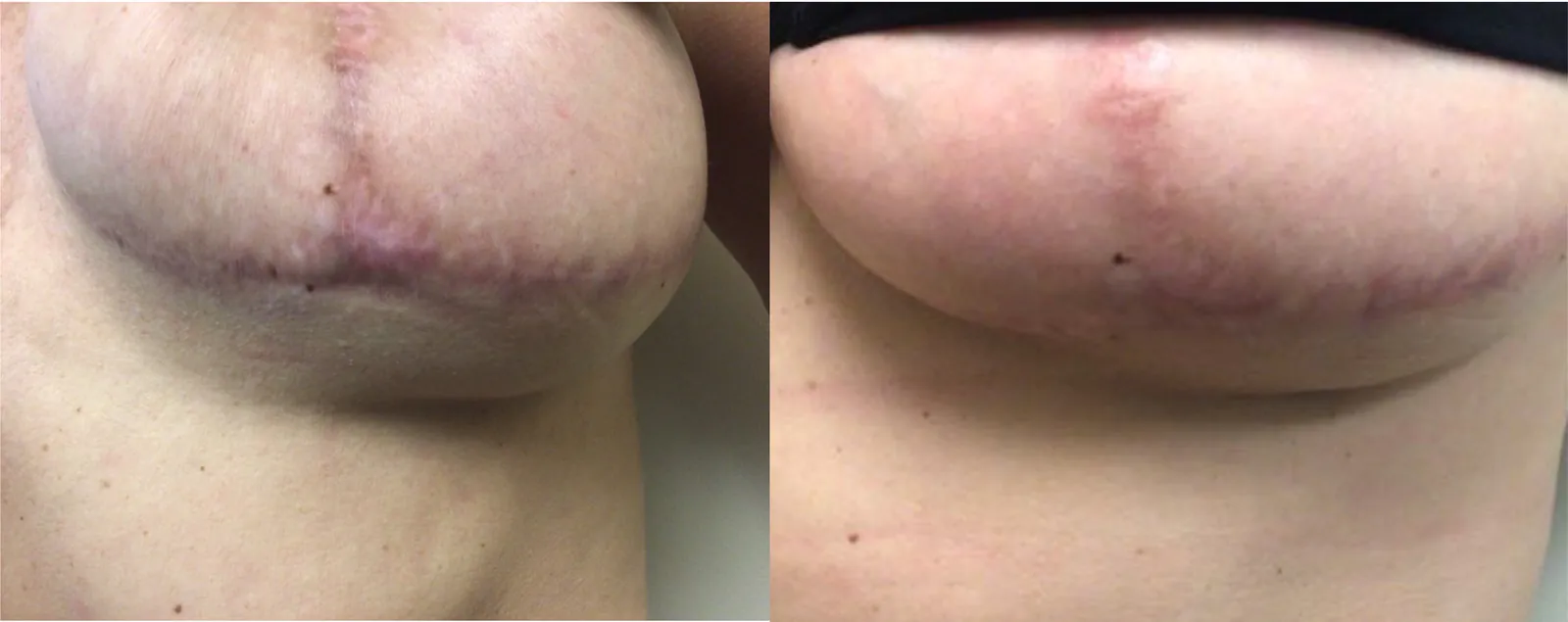
Courtesy of Nathan Trookman, MD
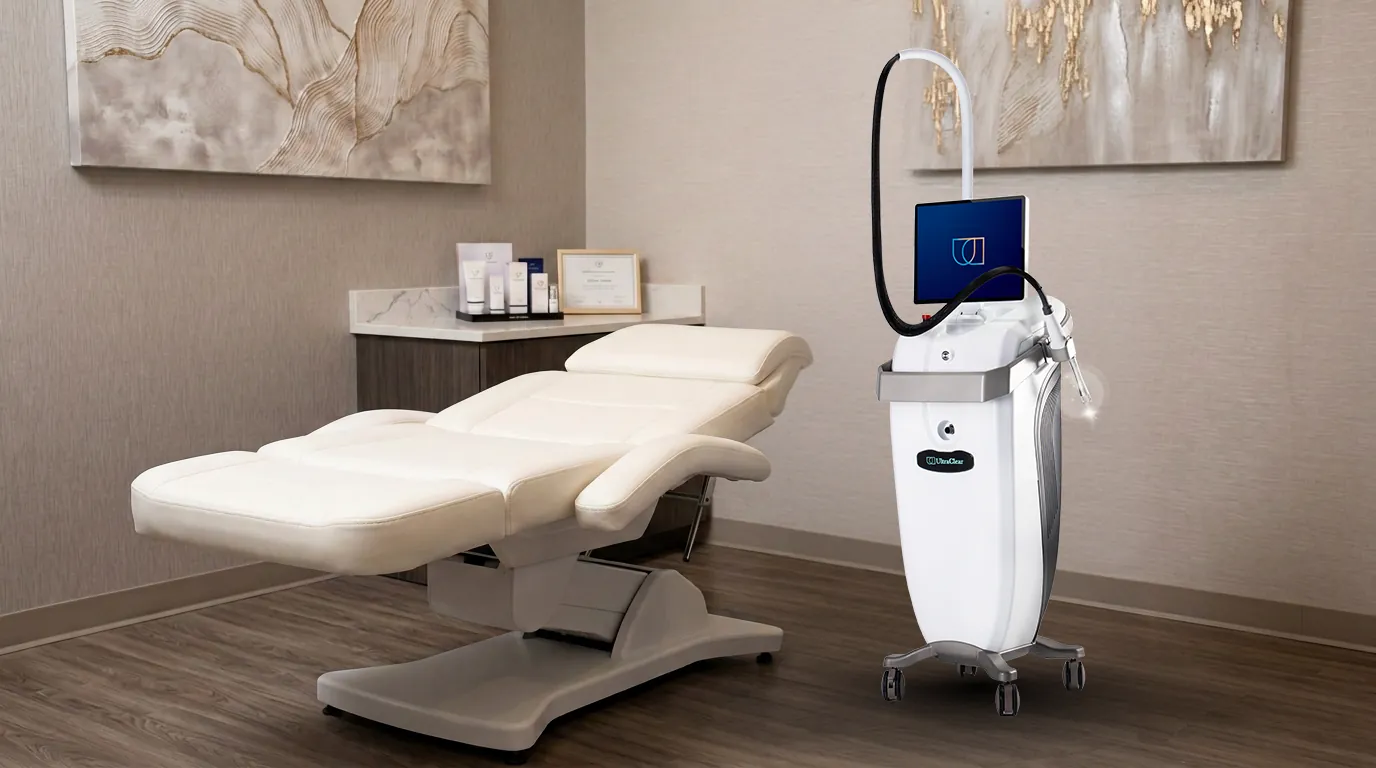
UltraClear: A More Comfortable Approach to Post-Surgical Scar Treatment
Surgical scars are a natural part of healing, but not all scars heal the same way.
Following a mastectomy, lumpectomy, or breast reconstruction, some patients may experience scars that are raised, thickened, uneven, or depressed. Others may notice changes in pigmentation or texture that remain long after surgery.
UltraClear’s 2910 nm cold fiber laser technology offers physicians a customizable approach to skin resurfacing and scar revision. With its 3DIntelliPulse® technology, it delivers precisely controlled energy to help support the skin’s natural remodeling process, helping improve the appearance and texture of certain surgical scars.
Depending on the scar and the patient’s individual needs, treatment may help soften thickened tissue, improve uneven texture, or make scars less noticeable.
One of the biggest benefits of UltraClear treatment is greater patient comfort and less downtime than traditional ablative lasers. Many of the treatments can be done without topical anesthesia. For survivors who have already undergone extensive medical procedures, comfort can be an important consideration.
In fact, David Weir’s patient described her overall pain with UltraClear and no topical numbing as minimal pain:
“It wasn’t bad at all. I did not feel much pain. The pain was a 1 or 2.”
While individual experiences and results vary, her perspective offers insight into what the treatment experience may be like for some patients.
Giving Back to Survivors: Dr. Andrés Sárraga’s Breast Cancer Awareness Initiative
For Andrés Sárraga, MD, a Double Board-Certified Plastic Surgeon and founder and medical director for ARTIS Institute for Plastic Surgery in Aventura, Florida and experienced UltraClear provider, helping breast cancer survivors improve their surgical scars is about much more than aesthetics.
Having used UltraClear for more than two years to address a variety of skin concerns, including surgical scars, Dr. Sárraga has seen firsthand how scar appearance and texture can affect patients.
Recognizing the challenges survivors may face, he is launching a special initiative during Breast Cancer Awareness Month by providing UltraClear scar treatments at no cost to breast cancer patients.
His motivation is simple: He wants to give something back to patients who have already been through so much.
“It’s not about trying to erase their memories,” he says. “I’m just trying to help them feel better about what it is.”
Dr. Sárraga also emphasizes the importance of selecting the right treatment for each patient. While some scars may respond well to laser resurfacing, others may benefit more from surgical scar revision or a combination of approaches.
What Can Breast Cancer Survivors Expect From UltraClear Scar Treatment?
For survivors interested in laser scar revision, understanding the treatment process can help set realistic expectations.
According to Dr. Sárraga, UltraClear scar treatments are typically straightforward procedures that can be tailored to the scar’s characteristics and the patient’s needs.
01. A personalized evaluation
Before treatment, the physician evaluates the scar, surrounding skin, and medical history to determine whether laser resurfacing is appropriate.
02. A focus on comfort
Many providers do not use topical anesthesia for scar treatments. However, the use of numbing cream and cooling during treatment can be used to help patients remain comfortable.
03. A manageable UltraClear recovery
For localized scar treatments, the treated area heals in less than a week. Aftercare may include protective ointments, moisturizer, and sun protection, depending on the treatment.
04. Progress over time
Scar remodeling takes time, and some patients may benefit from additional treatments. Dr. Sárraga typically reassesses patients approximately one month after their procedure to evaluate healing and determine next steps.
While laser resurfacing cannot completely eliminate every scar, it may offer an opportunity to improve its appearance and texture as part of a personalized treatment plan.
Turning Awareness Into Action
Breast Cancer Awareness Month is about more than recognizing a diagnosis. It’s about honoring those we’ve lost, supporting those still undergoing treatment, celebrating survivors, and helping people access the resources they need.
This year, Acclaro is extending that commitment through its #ScarsToStrength campaign.
Throughout October, Acclaro is encouraging its community to engage with breast cancer awareness content on social media. For every like, share, and comment on designated campaign posts, Acclaro will donate $1 toward breast cancer research and funding.
Together with providers like David Weir and Dr. Sárraga, the campaign reflects a shared commitment to supporting survivors beyond their initial diagnosis and treatment.
Because recovery doesn’t follow a single timeline, and support shouldn’t end when cancer treatment does.
Your Story. Your Strength.
Breast cancer can leave lasting marks, both visible and unseen. But those marks are only one part of a much bigger story, one defined by resilience and the strength to move forward.
At Acclaro, we’re proud to support that journey by helping physicians offer innovative treatment options that address the evolving needs of breast cancer survivors.
Through #ScarsToStrength, we’re celebrating the stories behind the scars and the people whose lives are so much greater than them.